GRAFT AI — Clinic platform
- Clinic platform
- 3D consultation
- Graft counting
- Patient app
- Design system
From the first enquiry to the result a year later
- Seven stages
- Enquiry, consultation, quote, booking, surgery, follow-up and completion, on one board
- 27 hairstyles
- In the illustrative simulation, with before and after in one view
- EU hosting
- Supabase in Frankfurt, private files and an audit trail
What it changes
- The patient’s recordChats, spreadsheets and photo foldersNow: One record, from enquiry to the 12-month result
- The planA sketch on a photoNow: A hairline on a 3D head, with the grafts estimated
- The count in theatreA paper tallyNow: Every tablet counting into one record
- Every AI numberTaken on trustNow: An estimate the doctor confirms
A clinic runs on WhatsApp, spreadsheets, photo folders and a paper tally in theatre. GRAFT AI puts it in one place, from the first enquiry to the result a year later. The AI drafts: it places photos on a 3D head, estimates the grafts a plan needs and proposes a count after surgery. The doctor checks every number before it is saved. Shown here with the demo clinic and illustrative patients.
- 01The day at a glance
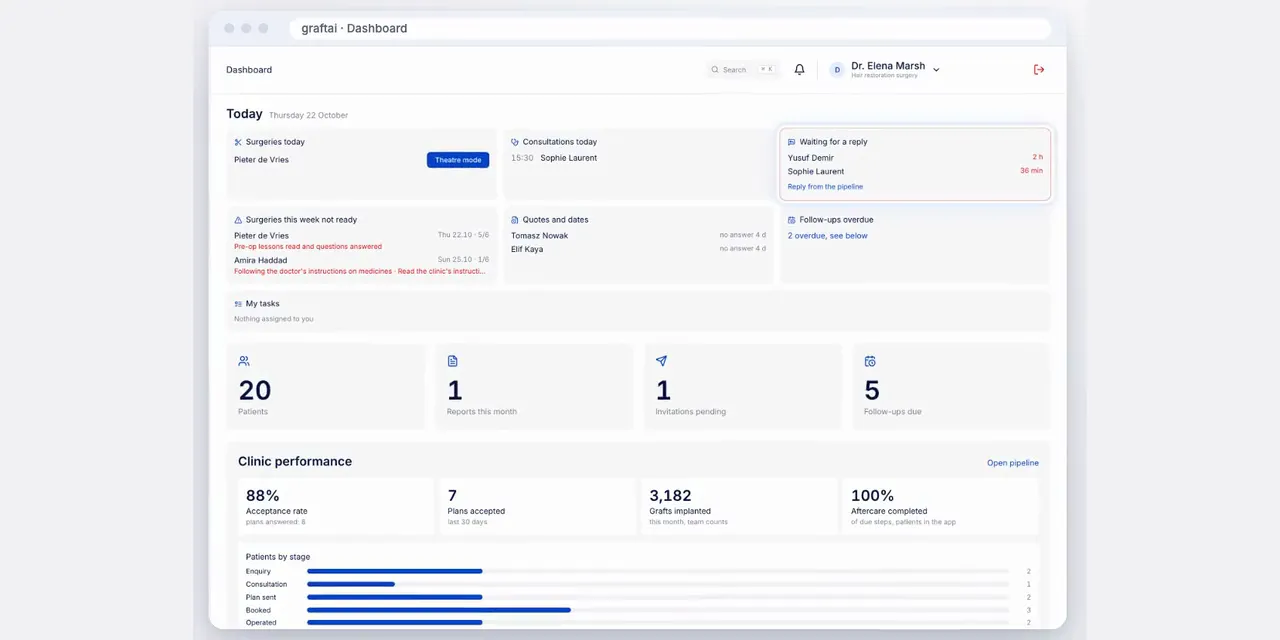
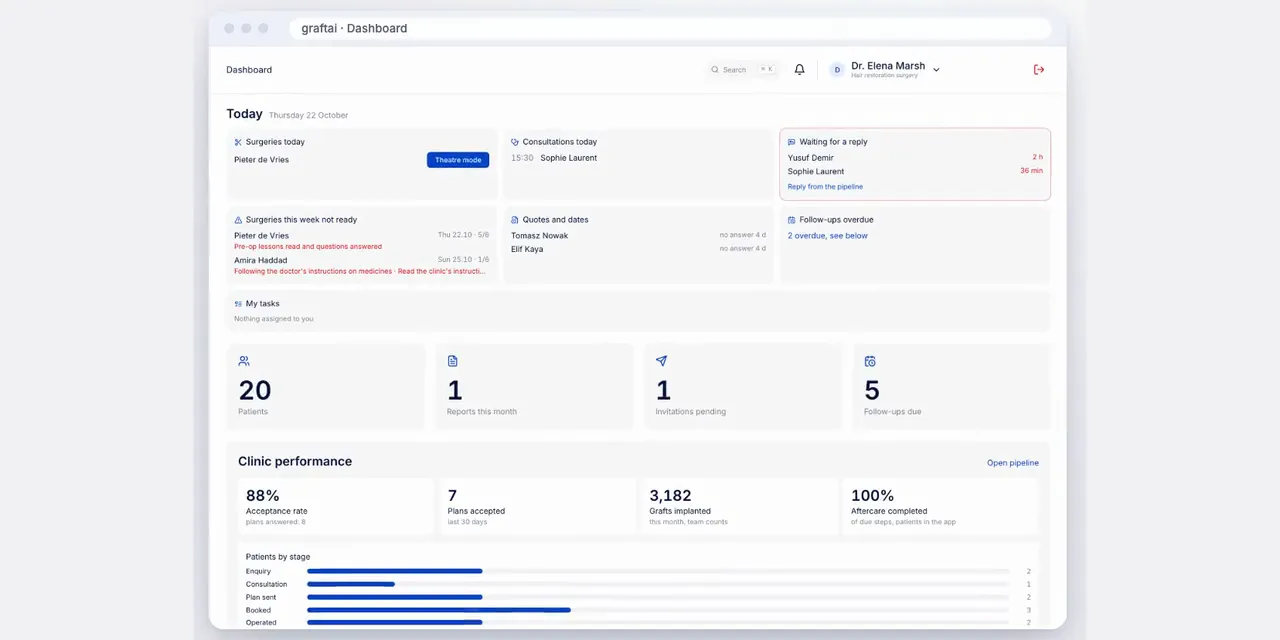
Each morning the dashboard shows the day’s surgeries and consultations, and every patient still waiting for a reply. One pipeline carries each patient from enquiry to follow-up, so the team sees who is waiting and for how long.
- 02Photos placed on a 3D head
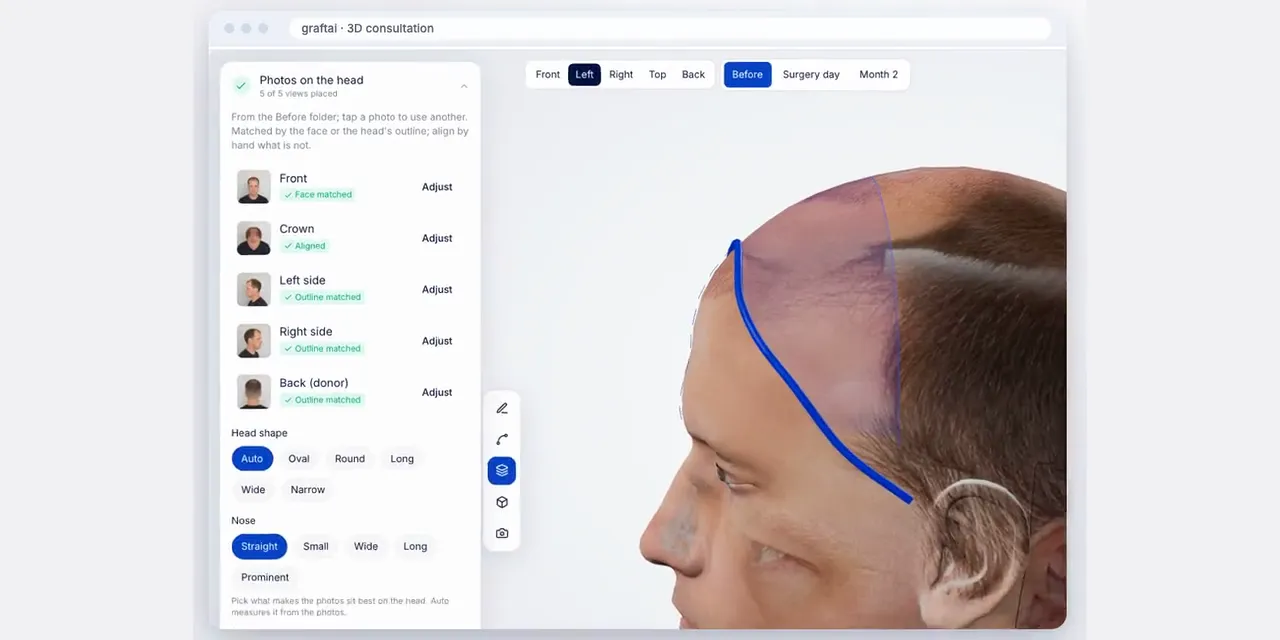
The patient sends photos from their own phone, one angle at a time. The platform places them on a 3D head, matched by the face and the skull’s outline. The doctor can adjust any of them.
- 03The plan, measured on the head
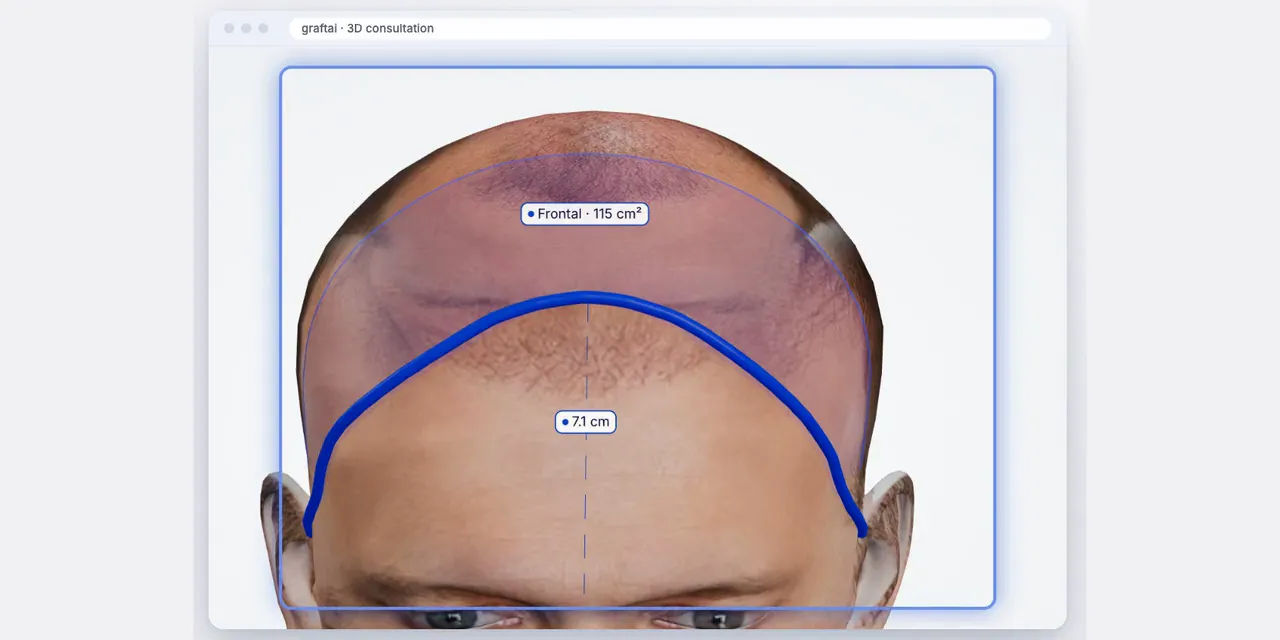
The doctor draws the new hairline on the head. GRAFT AI estimates how many grafts the plan needs, and what the donor area can give at the share the doctor sets. Both are estimates the doctor confirms.
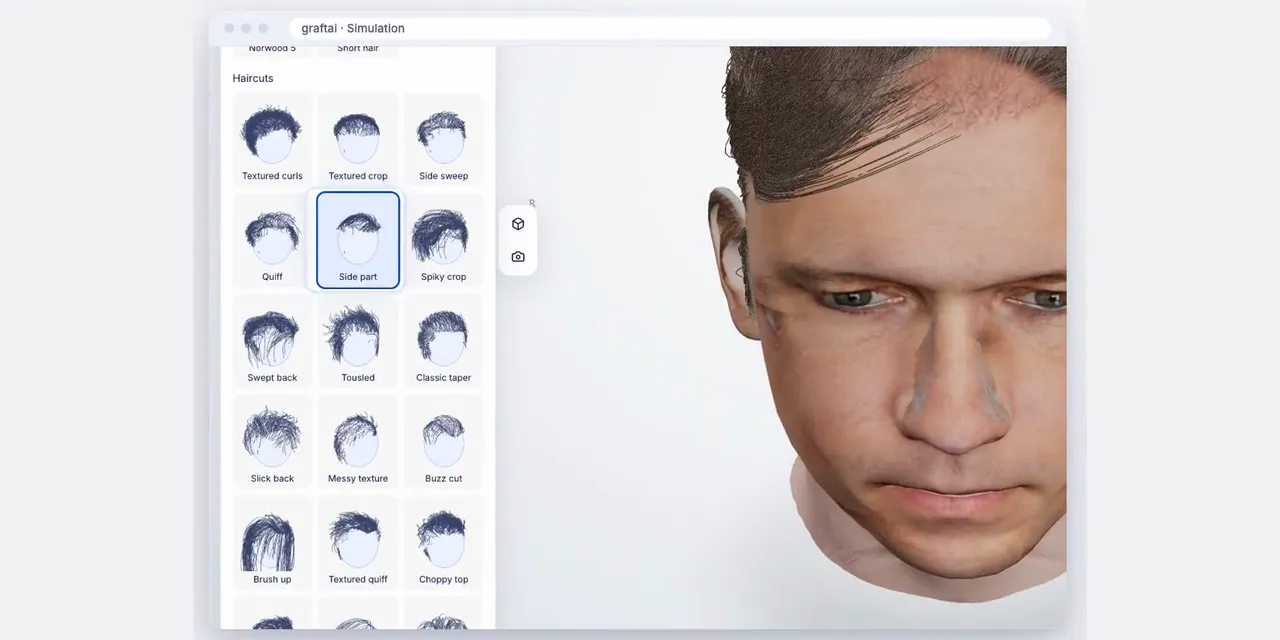
- 04An illustration before the surgery
The patient sees the plan in 27 hairstyles, with before and after in one view. It is an illustration of the plan, not a prediction of the result, and the screen says so.
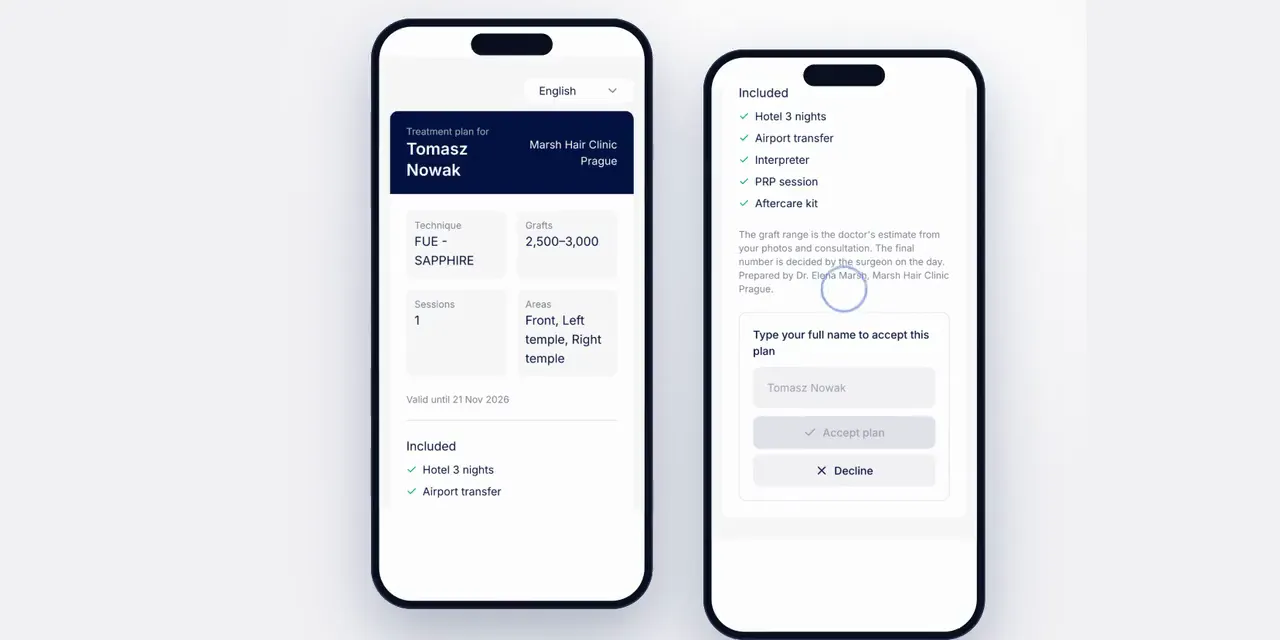
- 05A quote accepted from a link
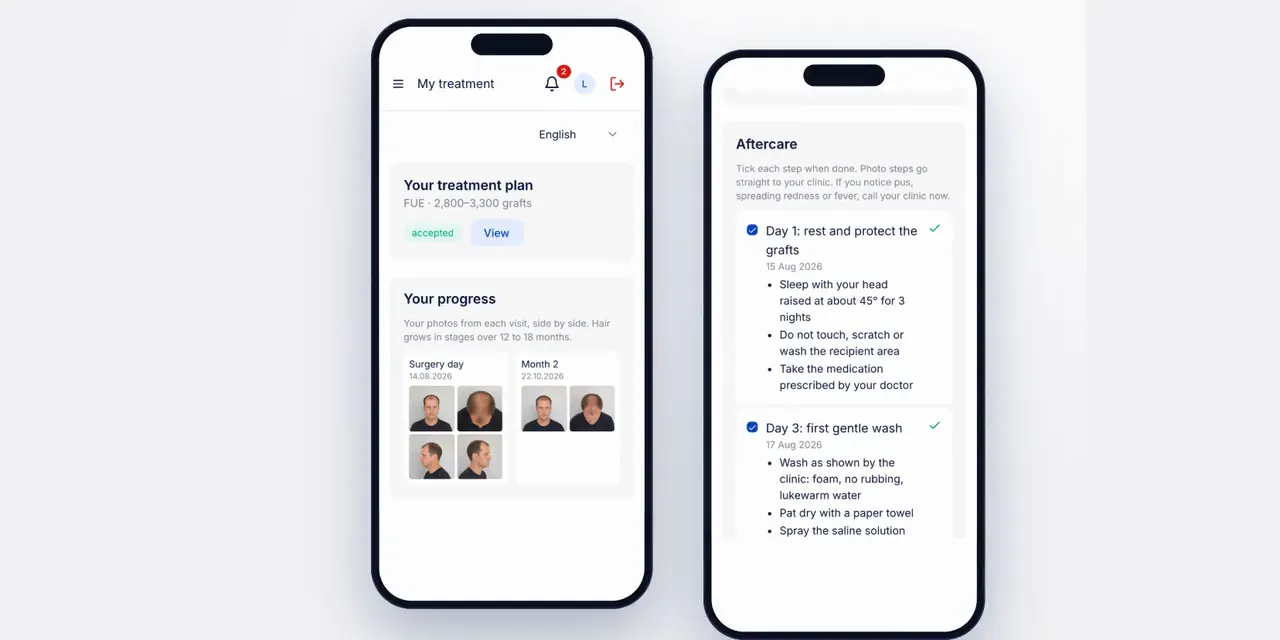
The treatment plan opens on the patient’s phone, with the technique, the graft range and what is included. The patient accepts it from the link. Consent is signed in the app or in the clinic, and each signature is kept with the version that was signed.
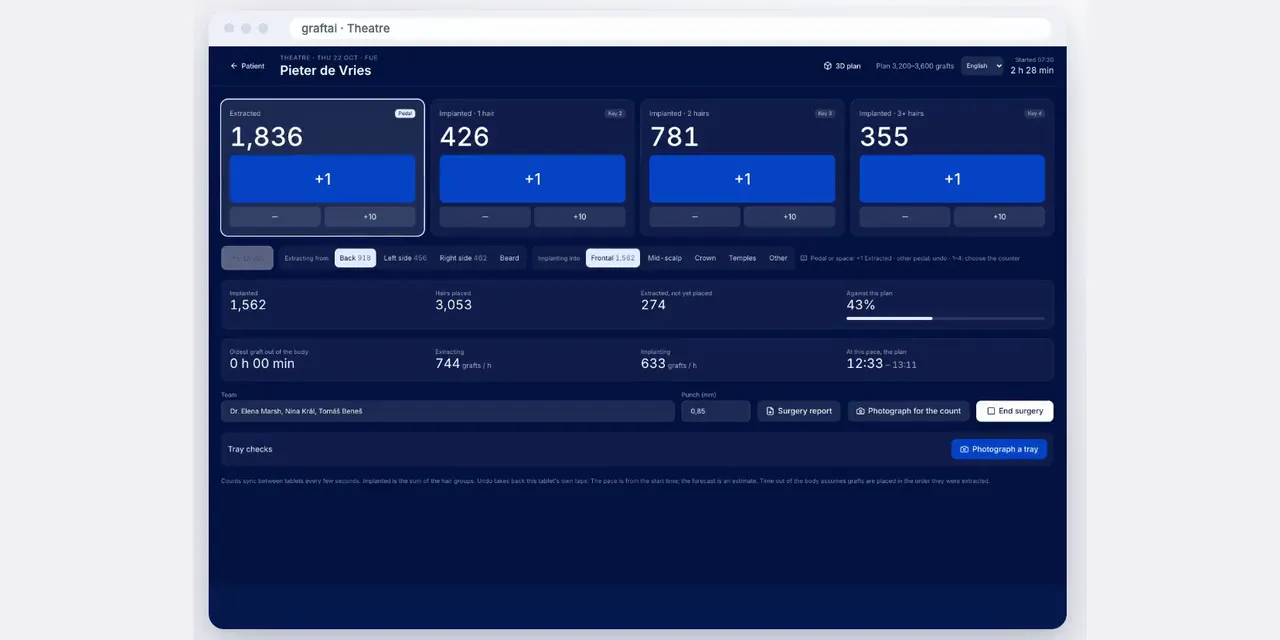
- 06A live count in theatre
On surgery day every tablet in theatre counts into the same record, grafts extracted and implanted, zone by zone. The pace and an estimated finish time update as the team counts.
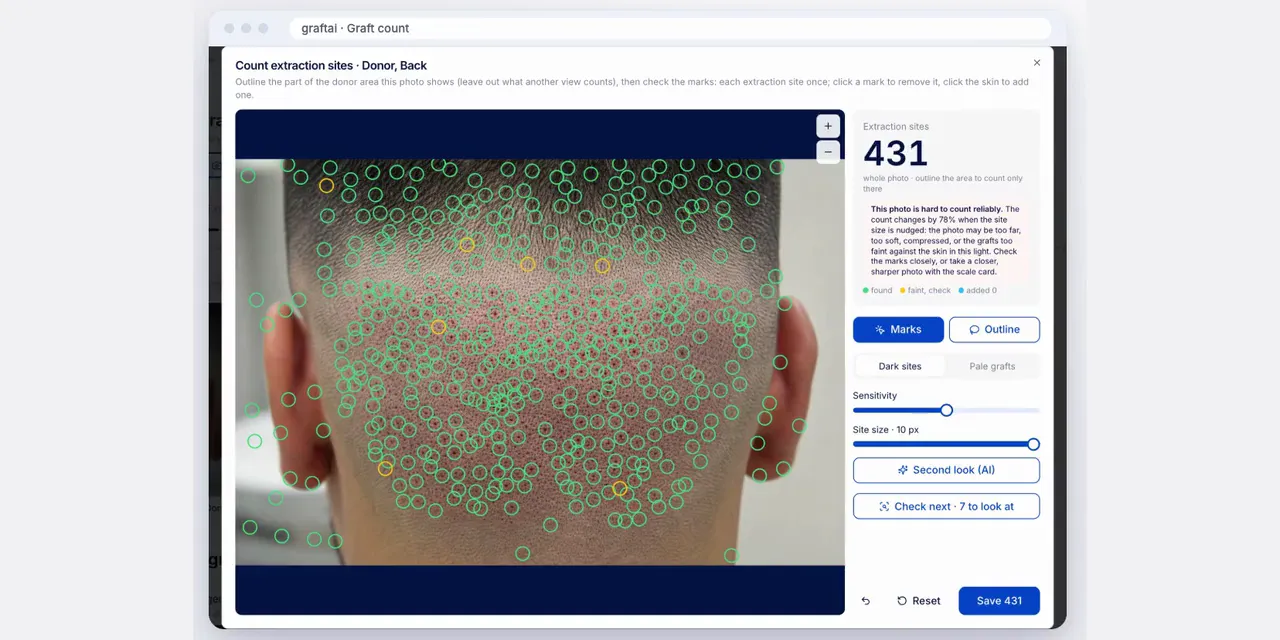
- 07Counted on the photos
After the surgery the platform proposes a count on the photos, and warns when a photo may be hard to count. The doctor reviews the marks and confirms every number.
- 08The patient’s own app
At home the patient follows the aftercare plan day by day, chats with the clinic, and adds photos at every visit. The photos line up side by side, so the doctor and the patient both see the growth.
- 09How it is built
React and TypeScript on Vite. Supabase, hosted in Frankfurt, holds the data: Postgres with row-level rules for every clinic, private storage, and edge functions for the AI. The 3D head is drawn with three.js, and the hair is rendered on the GPU. Face landmarks are found in the browser with MediaPipe, and the graft counter runs in a web worker. Patient files open only through short-lived links, and every change goes in an audit trail. Playwright drives the whole patient journey end to end, and a separate test suite attacks the database’s access rules.
The work
Same shape of problem on your side?
Fifteen minutes, no slides, and a reply within one working day.
Who picks up
“You will be talking to me, not to an account manager. I scope the work and I am on the build.”