Sladkaya Pochta — Online shop
- Online shop
- 3D renders in Blender
- Live 3D
- Instagram pack
From the first version to her real catalogue
- Six versions
- Five directions and the one that went live
- 24 gifts
- Her catalogue, from 250 g to 2.5 kg
What it changes
- The catalogueOne price-list pictureNow: 24 gifts, each with photo, weight and price
- Product photosPhone shots from WhatsAppNow: Cut out, with the lettering untouched
A small New Year business in Kazakhstan: she buys candies from the factories — Rakhat, Konti, Yashkino — and packs them into printed gift boxes. She does not make candy, and the site never says she does. This is the whole project as it happened, in four days: five directions, the verdict on each, and then her real catalogue.
- 01The brief
Sell New Year gifts in December, in Russian, to parents and to companies buying fifty at a time. Orders come in through WhatsApp, and that should not change: the site has to make the message, not replace it.
- 02A night town
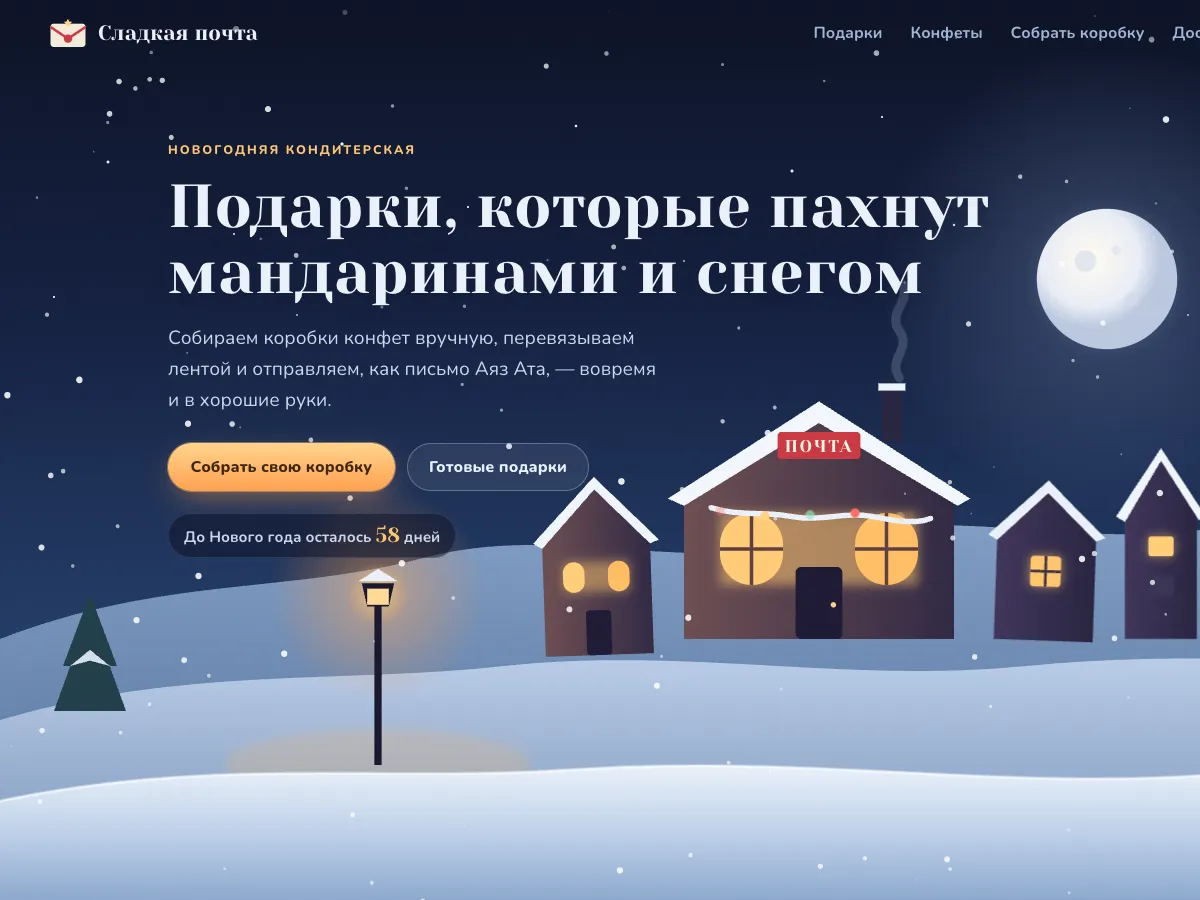
The first version: a snowy town at night, navy cards, a classic serif. Rejected the same day: “Wrong style. It looks AI-made.” The lesson was clear. A cartoon brief dressed in a generic dark interface reads as generated.
- 03Daylight, like Klaus
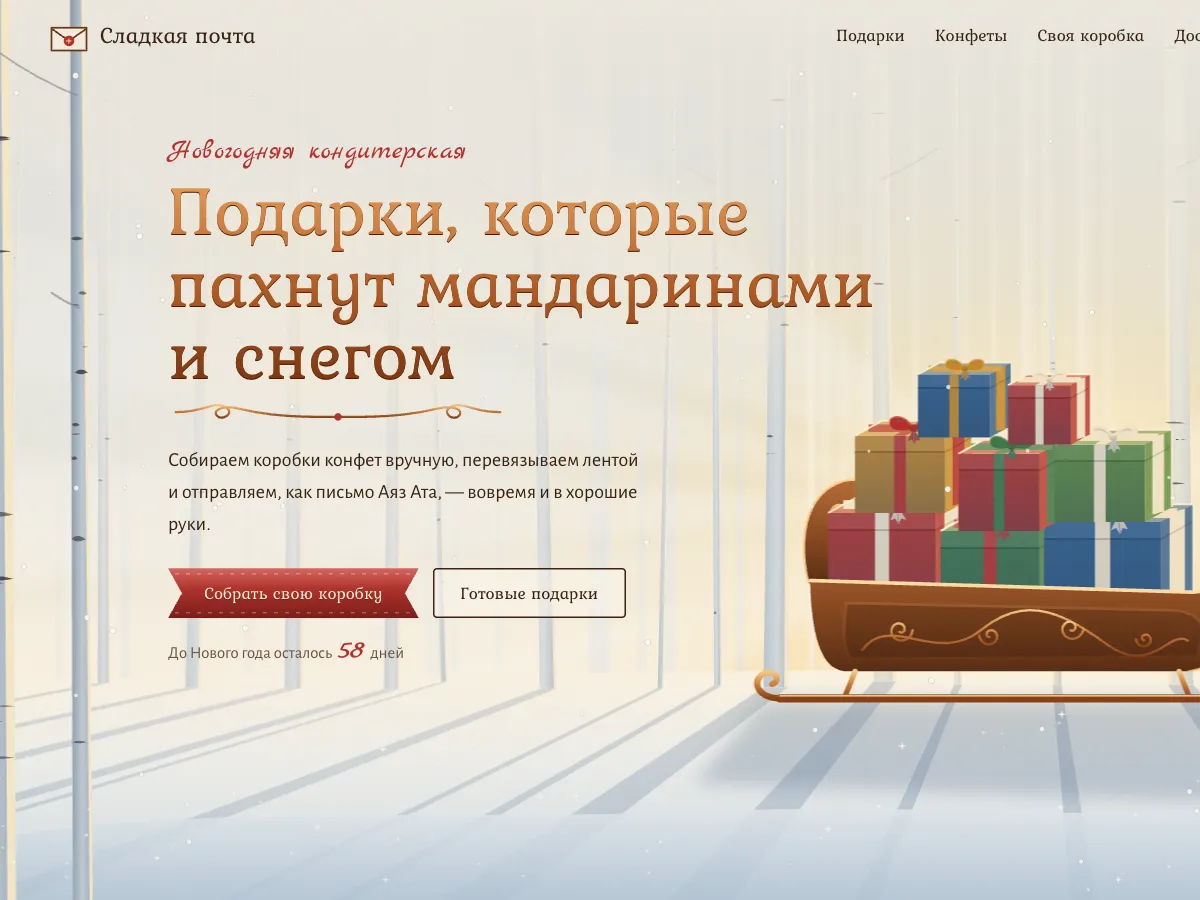
The reference that came back was the film Klaus. To us that meant daylight: a low sun behind a misty birch wood, long blue shadows on the snow, a copper sleigh full of gifts, and a shop built from wood, paper and ribbon.
- 04Every object in Blender
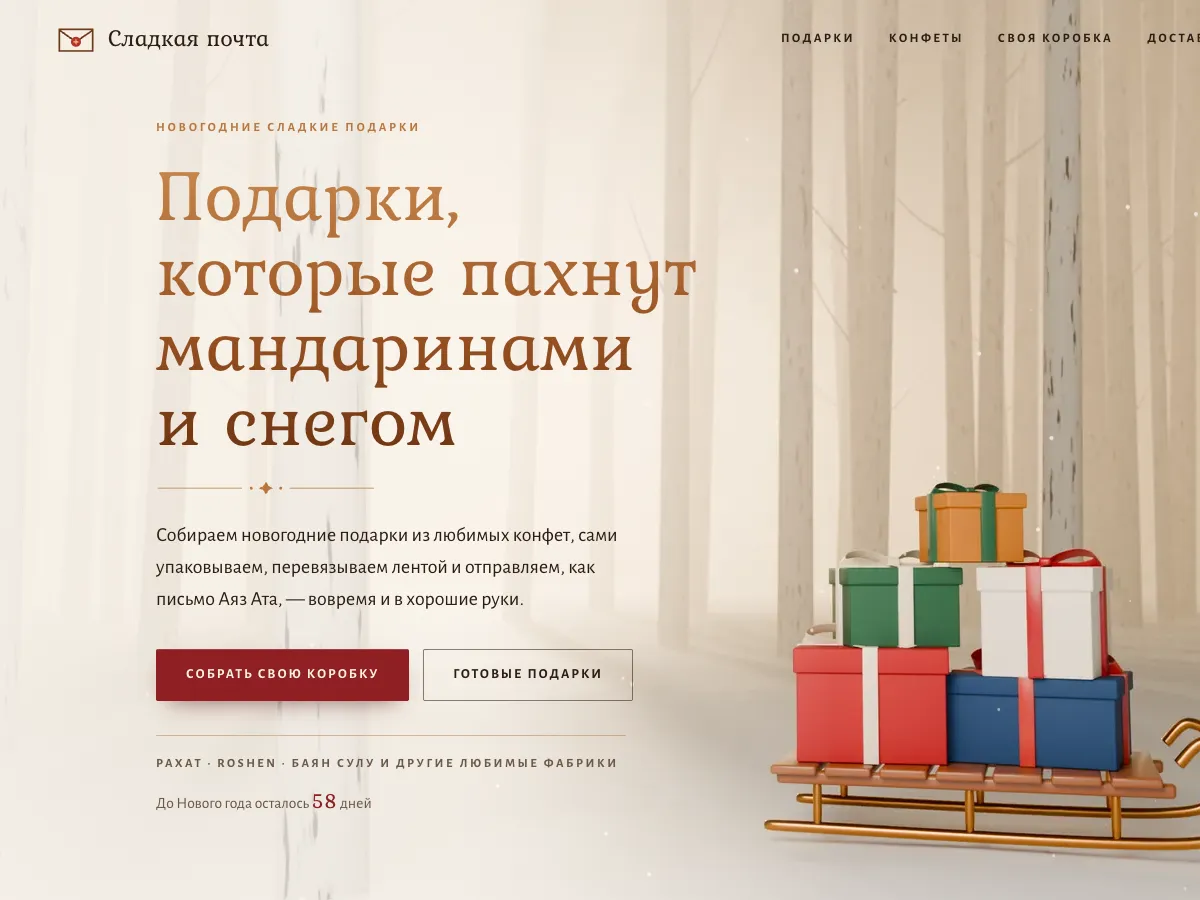
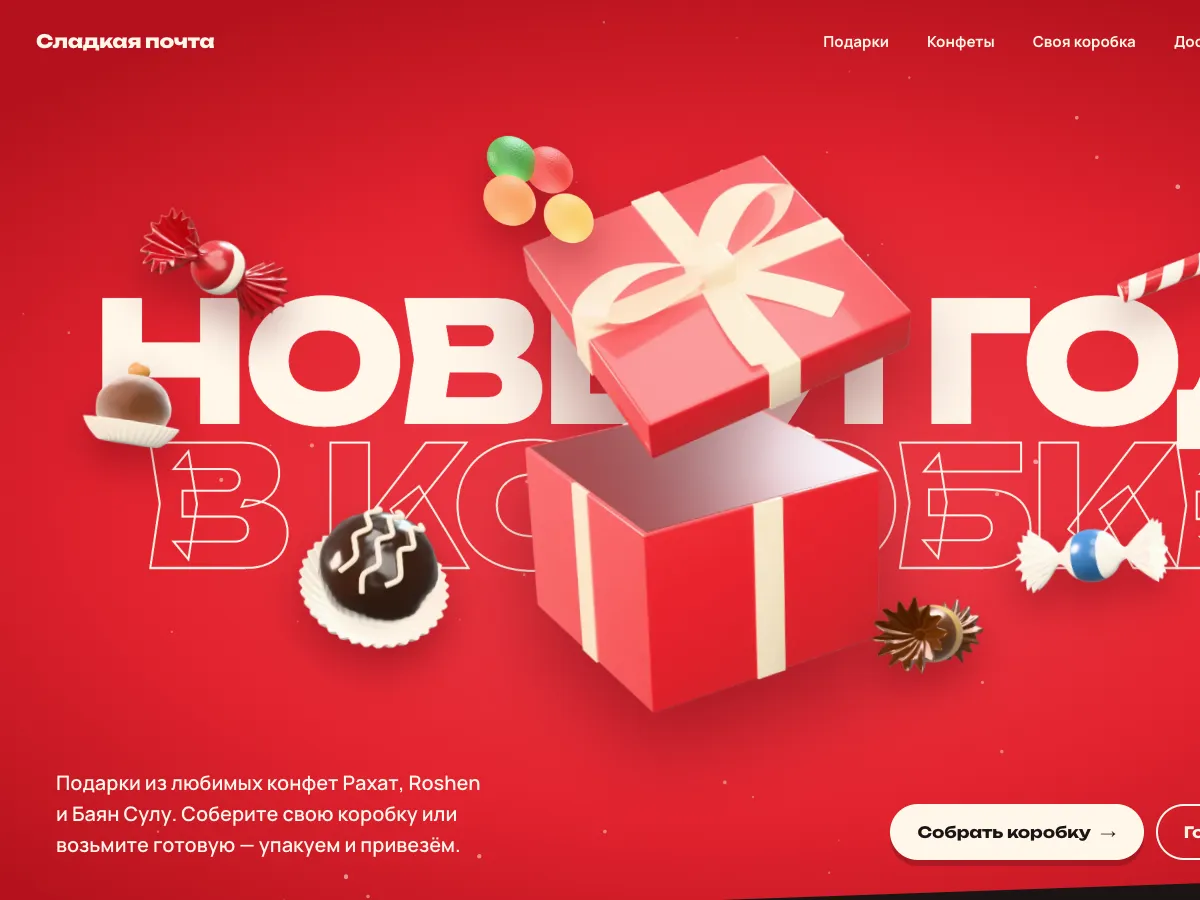
To make it feel more expensive, every gift, candy and the hero became a 3D render, built by script in Blender rather than modelled by hand. The verdict: “Everything looks cheap.” Asked for a direction with real options, the client picked bold pop, and named the renders as the cheap part.
- 05Bold pop
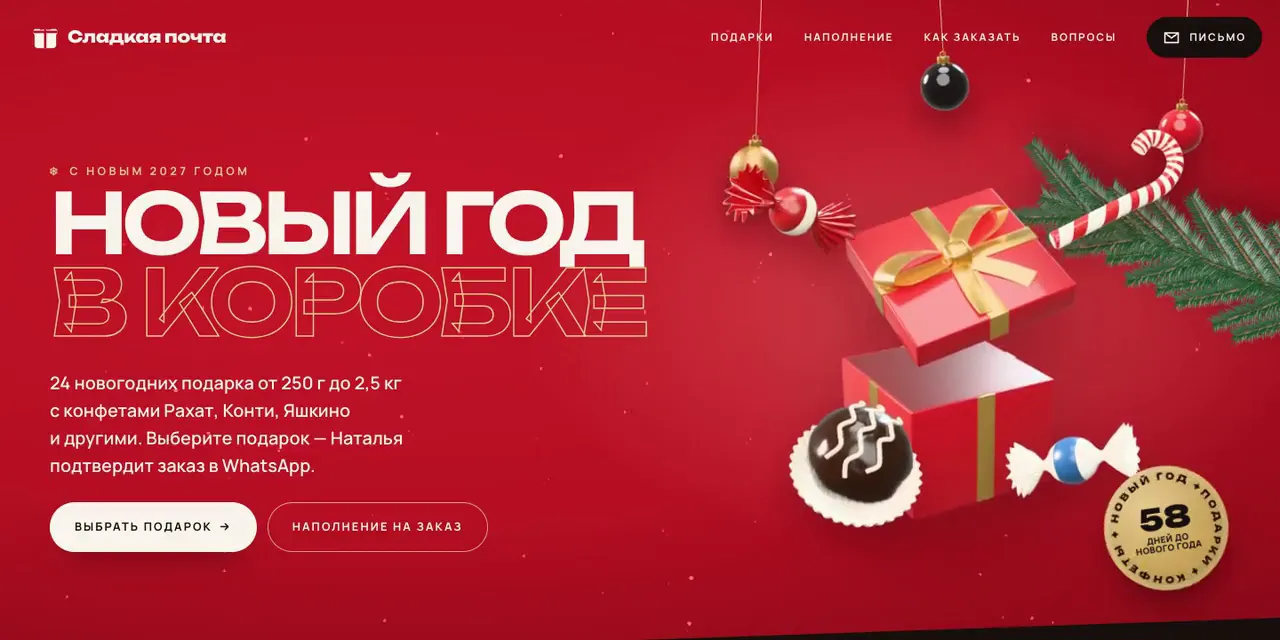
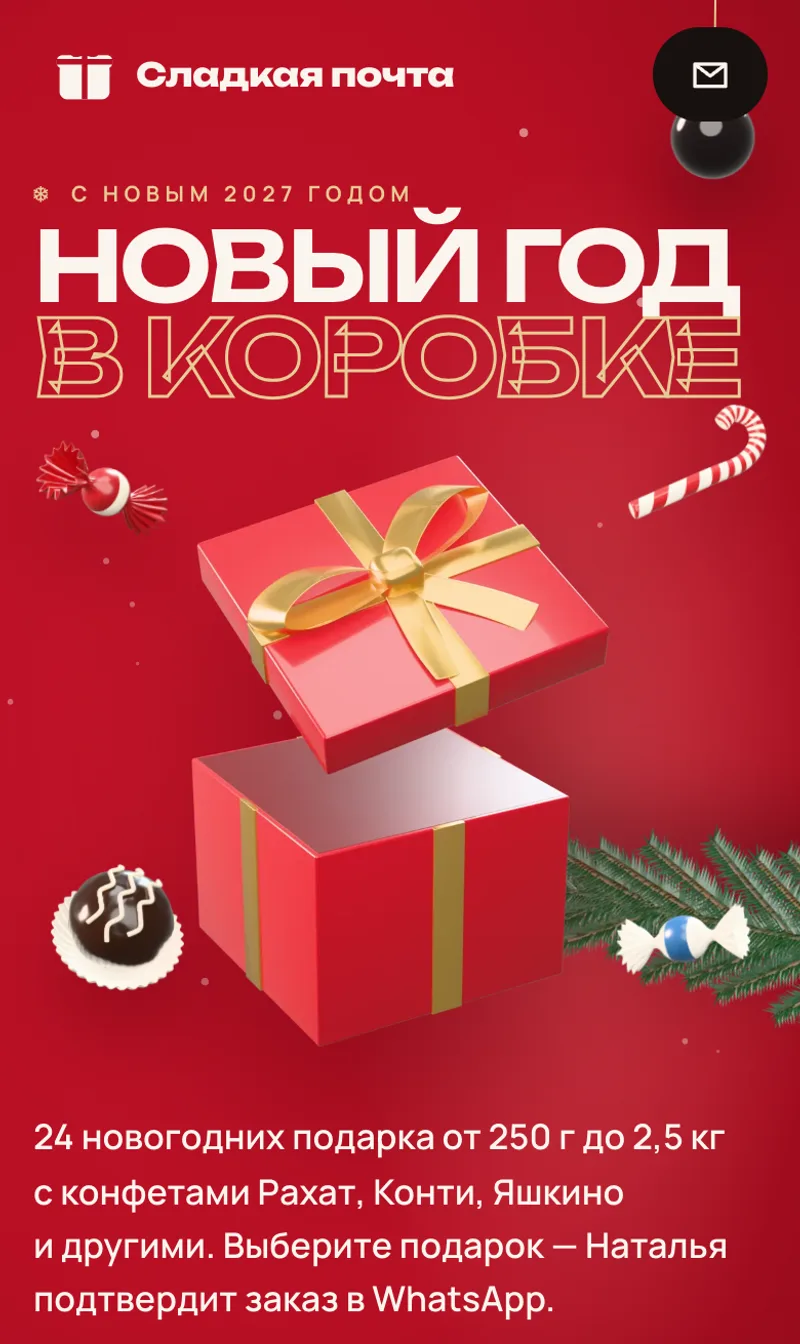
A cherry hero that says “New Year in a box”, an open box with candies that drift and spin as you scroll, candy-coloured tiles and tilted marquees. The renders were redone the way 3D icons are made: lacquer, bright rims, no floor. Approved: “A great option.” Then a request for a dark version as well.
- 06The dark version, in live 3D
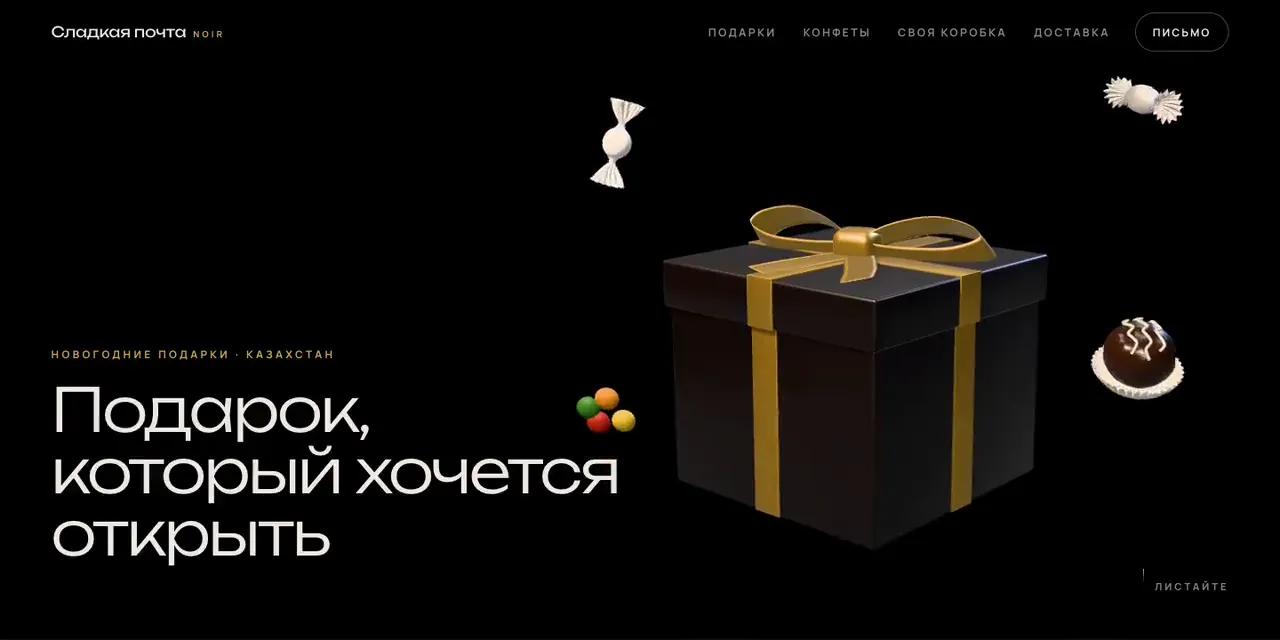
A black lacquered box drawn live with three.js: as you scroll it turns, the lid lifts, a glow rises and the candies fall in. The models are the same Blender files, exported compressed: about half a megabyte for the whole scene. Phones get a still render instead. The box is above, ready to open.
- 07Pop, but luxe
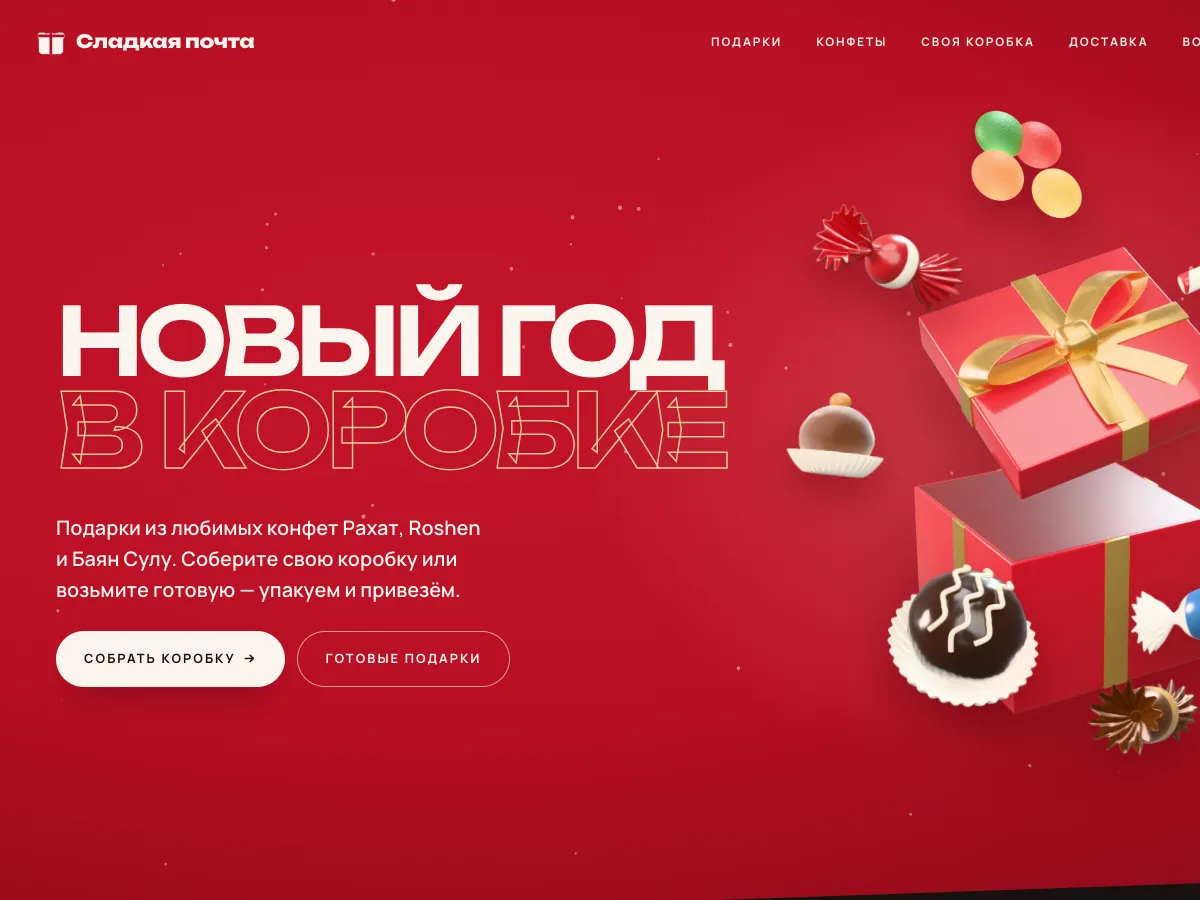
The last note was “make it look very expensive”. The palette came down to cherry, cream, ink and one gold. The ribbons in the renders became gold satin, the display type went lighter, the hovers stopped wobbling and the emoji became line icons. The headline sits on its own, and nothing covers the words.
- 08Her real catalogue
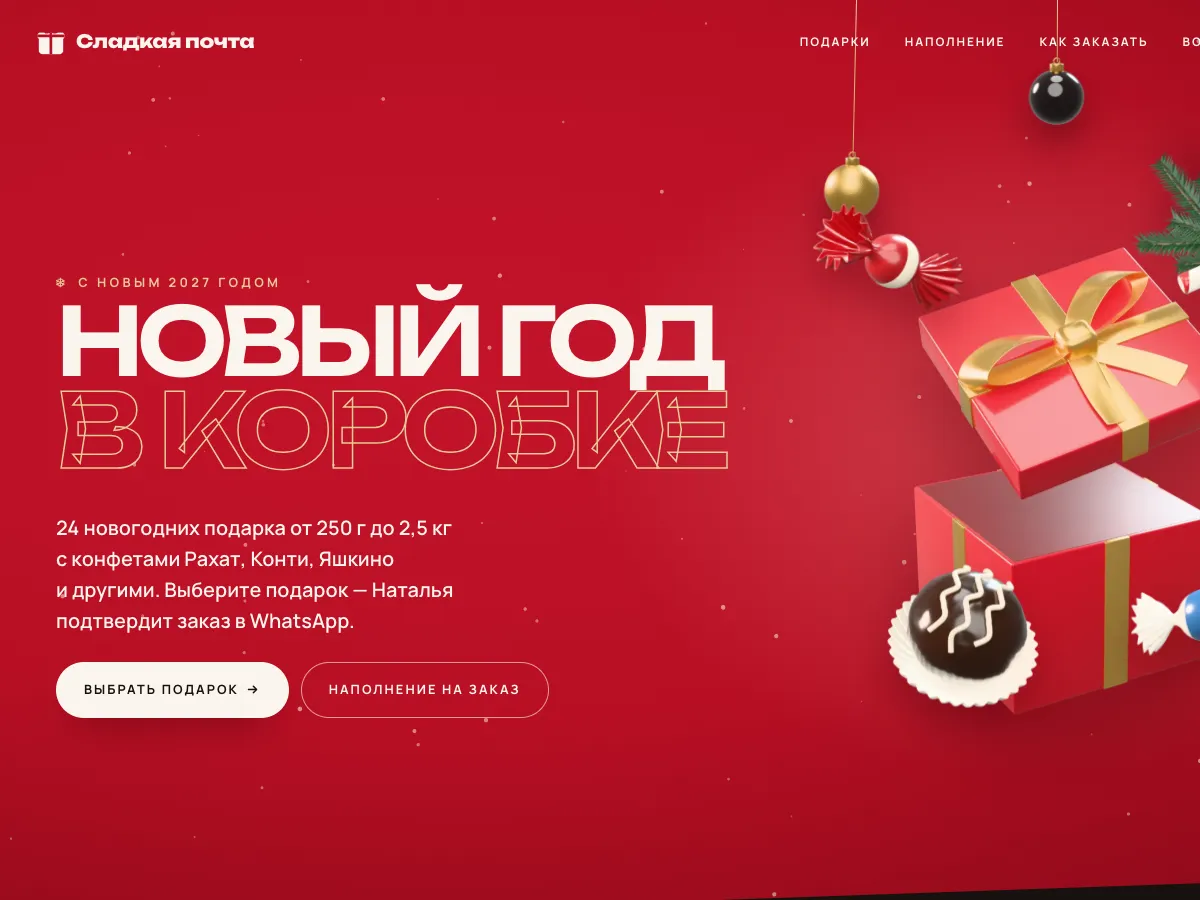
Then the real thing arrived: her price list and 24 photos taken on her phone. The backgrounds were cut out and the colour lightly corrected, but the printed lettering on every box was left exactly as it is. Generative upscalers rewrite lettering, so none were used. Each gift shows its weight and her price. The order goes to her WhatsApp as one ready message. The demo sections with invented prices are switched off until she sends real ones.
- 09How it is built
Plain HTML, CSS and JavaScript, with no build step and no backend. The cart is a “letter” kept in the browser; sending it opens WhatsApp with the order written out, or copies it. Renders come from Python scripts run in Blender and are compressed to WebP, about 600 KB for the whole shop. The dark version uses three.js with Draco-compressed models. An Instagram post and seven stories are generated from the same catalogue, so a price changes in one place.


The work
Same shape of problem on your side?
Fifteen minutes, no slides, and a reply within one working day.
Who picks up

“You will be talking to me, not to an account manager. I scope the work and I am on the build.”